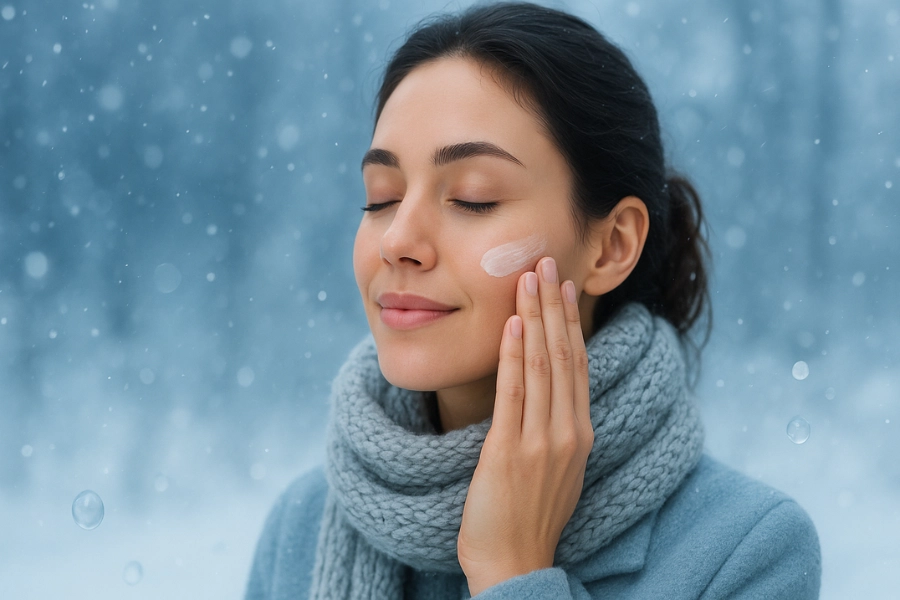
Winter and dry skin often go hand in hand due to the drastic changes in weather conditions. When the cold, dry air of winter arrives, many people struggle with skin that feels tight, flaky, and irritated. This happens because winter reduces the skin’s moisture levels, impairing its natural barrier and making it more vulnerable. A dedicated winter skincare routine is essential to combat these effects, replenish hydration, and protect skin’s natural glow throughout the season.
At Nielies, a commitment to hydration and natural skincare for dry skin drives the development of products that deeply nourish and shield your skin, ensuring comfort even in harsh winter months.
Why Skin Gets Dry in Winter
The primary reason why skin gets dry in winter is the combination of environmental factors that strip away moisture faster than normal. Cold air holds less humidity, which quickly leads to water evaporation from the skin’s surface. Additionally, indoor heating systems, while keeping rooms warm, create an arid environment that further depletes skin moisture.
Cold weather also slows down the skin’s oil production, which results in a weakened skin barrier. Without the protective oils, skin becomes susceptible to dryness, irritation, and rough texture.
Common cold weather skin problems include skin tightness, flaking, redness, and increased sensitivity. These symptoms highlight the importance of tailoring your skincare routine specifically for winter conditions.
Understanding Dry Skin vs. Dehydrated Skin
It’s important to distinguish between dry skin and dehydrated skin. Dry skin is a skin type characterized by insufficient oil production, making the skin feel rough and flaky. Dehydrated skin, however, is a skin condition where the skin lacks water, causing tightness and dullness irrespective of skin type.
In winter skincare, both hydration (adding water content) and moisturization (locking in moisture) are crucial. Understanding this helps in choosing the right ingredients and products for effective dry skin treatment.
Key Hydrating Ingredients for Dry Skin in Winter
The best winter moisturizer for dry skin often contains ingredients that repair and protect the skin barrier while boosting hydration:
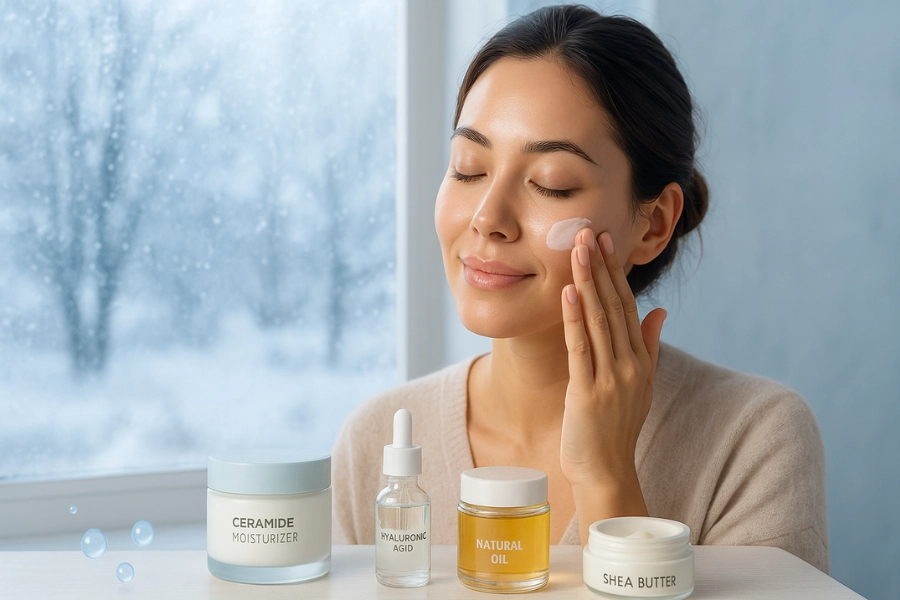
- Ceramides: These lipid molecules restore the skin barrier by locking in moisture and protecting against environmental aggressors. Ceramide moisturizers in winter are vital for preventing water loss.
- Glycerin: A powerful humectant that draws moisture into the skin from the environment, glycerin cream for dry skin is essential for sustained hydration in the cold months.
- Hyaluronic Acid: Known for holding up to 1000 times its weight in water, it deeply hydrates and plumps the skin, reducing dryness and fine lines.
- Natural oils and butters like jojoba oil and shea butter create a protective layer that keeps moisture locked in while soothing irritation.
These hydrating ingredients form the cornerstone of effective winter skincare routine products.
Winter Skincare Routine for Dry Skin
Protecting and hydrating your skin during winter calls for a structured routine that addresses the specific challenges of the season:
- Morning routine: Start with a gentle, non-stripping cleanser followed by a hydrating serum rich in humectants like glycerin or hyaluronic acid. Apply a thick winter moisturizer rich in ceramides and natural oils to seal in moisture. Finish with an SPF to protect against UV rays even in low sunlight.
- Night routine: Use a nourishing cleanser to remove impurities without drying. Follow with a repair serum that supports skin barrier recovery overnight. Finally, apply a winter night cream for dry skin formulated to deeply moisturize and rejuvenate while you sleep.
Layering hydrating products correctly enhances their effectiveness and reduces irritation risk. Applying the serum before the moisturizer allows better absorption and long-lasting hydration.
Best Moisturizer for Winter and Winter Cream for Dry Skin
Choosing the right moisturizer is key to managing dry winter skin. Look for rich formulations containing ceramides, glycerin, and natural oils that both hydrate skin in winter and strengthen its protective barrier.
Nielies’ winter moisturizers are designed with these ingredients, balancing richness and comfort so skin does not feel greasy. For those with oily skin, winter moisturizer for oily skin should be lightweight yet hydrating—gel-based or water-based creams with humectants are ideal.
Winter and Dry Skin Face Care Tips
To prevent dryness and irritation:
- Avoid hot showers and harsh soaps that strip natural oils, as they exacerbate dryness.
- Use a humidifier indoors to maintain optimal moisture levels in the air.
- Exfoliate gently and not more than once or twice a week with mild exfoliants to remove dead skin without damaging the skin barrier.
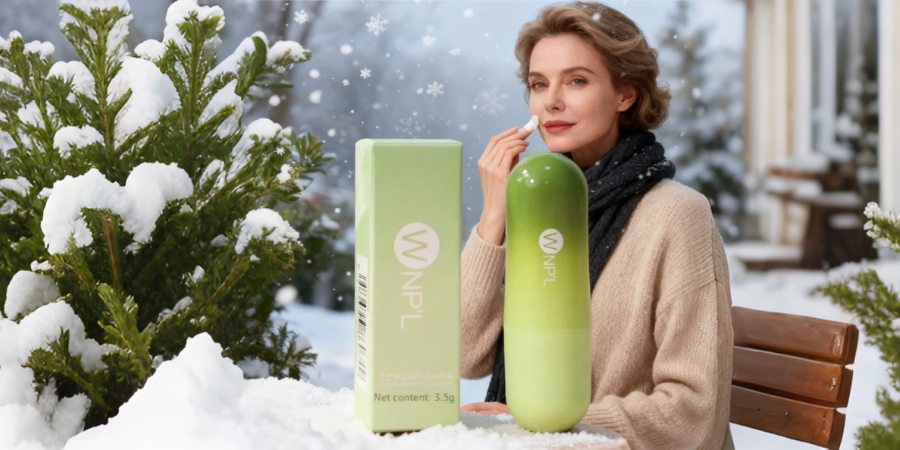
- Don’t forget protective care for delicate areas like lips and under eyes. Use moisturizing patches and creams designed for winter wear.
Natural Skincare for Dry Skin in Winter
Many natural ingredients provide effective relief for winter dry skin. Honey, aloe vera, and oatmeal have soothing, anti-inflammatory, and humectant properties that complement professional skincare products well.
Home remedies can be part of your regimen if used safely and paired with scientifically backed products. Nielies’ ethos embraces combining natural and effective hydration solutions to promote skin health.
Winter Body Lotion for Dry Skin
Hydration should extend beyond the face. Use rich, emollient winter body lotion for dry skin after bathing to lock in moisture and protect your entire body from cold weather effects.
Apply body lotions generously to prevent flakiness, roughness, and cracking often worsened by winter dryness.
Winter Skin Protection Tips
To preserve skin hydration and health:
- Wear protective accessories like scarves, gloves, and hats to shield exposed skin from harsh winds.
- Use SPF daily. UV rays can still damage skin even when the sun is less intense.
- Avoid contact with known irritants or allergens that trigger dryness or eczema flares.
- Drink plenty of water and eat a balanced diet rich in omega fatty acids and antioxidants which support skin hydration and repair.
Dry Skin Treatment & Dry Skin Remedies
Besides moisturizers, specialized dry skin treatment options help manage severe dryness during winter:
- Hydrating masks and professional-grade products like Nielies’ jelly masks or vajacial masks offer intensive moisture replenishment and skin barrier repair.
- Dermatologists may recommend products with ceramides, urea, or lactic acid for persistent dryness and scaling.
- Knowing when to seek expert advice is crucial if skin becomes cracked, inflamed, or fails to improve with basic care.
Winter Skincare for Women
Women may face particular winter skin challenges involving hormonal fluctuations, increased sensitivity, or aging skin concerns such as fine lines and dullness.
Tailored products and routines that focus on hydration, barrier repair, and gentle ingredients benefit women’s skin during winter.
Winter Skincare Routine for Glowing Skin
Winter dryness often dulls the skin’s radiance. To maintain a fresh and glowing complexion:
- Include gentle exfoliation to remove dead cells and promote cell renewal.
- Focus on deep hydration with serums and moisturizers containing brightening antioxidants like vitamin C.
- Use nourishing masks regularly to boost radiance and skin texture.
This routine supports a healthy glow despite the harsh winter climate.
Dermatologist Recommendations
Experts advise:
- Patch testing new skincare products to avoid irritation.
- Consistent moisturizing as the foundation of any winter skincare approach.
- Prioritizing skin barrier repair through products with ceramides, fatty acids, and humectants.
- Avoiding harsh physical scrubs and harsh ingredients that can worsen dryness.
Taking these precautions ensures winter dry skin is managed gently but effectively.