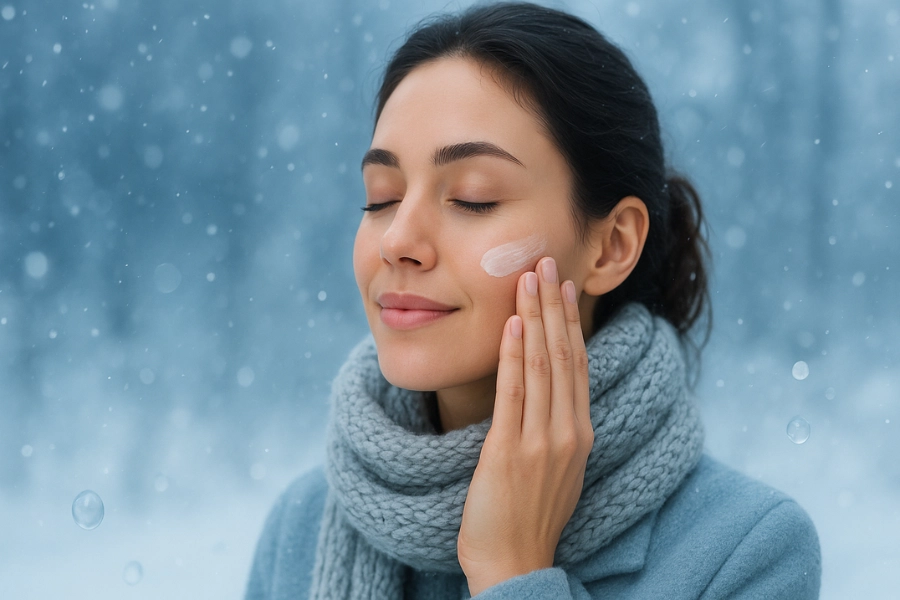
Winter skin dryness is a common issue caused by cold weather, low humidity, and indoor heating. To learn how to avoid skin dryness in winter, it’s essential to use hydrating products such as rich moisturizers, nourishing serums, and gentle cleansers that preserve your skin’s natural oils. Daily application of sunscreen protects your skin from UV damage, which can make winter skin dryness worse. Additionally, avoiding long hot showers and using a humidifier indoors help maintain skin moisture. This winter skincare routine focuses on combating winter skin dryness by reinforcing your skin barrier and locking in hydration for soft, healthy skin throughout the season.
How to Avoid Skin Dryness in Winter
Dry skin in winter is primarily caused by environmental and physiological changes that disrupt your skin’s natural moisture balance. Cold outdoor air combined with heated indoor environments significantly reduces humidity levels. This lack of moisture in the air pulls water from the top layer of your skin, weakening its barrier function.
Additionally, the skin barrier, which naturally protects against pollutants and moisture loss, becomes compromised in colder weather. This disruption leads to increased transepidermal water loss (TEWL), leaving skin feeling tight, rough, and prone to irritation. Harsh winter winds further aggravate skin dryness by physically stripping away natural oils.
Given these challenges, maintaining proactive skincare habits through winter is vital. A hydrating, replenishing routine prevents moisture depletion before dryness begins, ensuring your skin stays resilient and comfortable.
Winter Skincare Routine Essentials
A winter skincare routine must focus on gentle care and intensive hydration while avoiding products that exacerbate dryness. Key steps include:
- Cleansing: Use mild, soap-free cleansers designed for dry or sensitive skin. Avoid harsh foaming cleansers that strip natural oils, which protect the skin barrier.
- Exfoliating: Regular but gentle exfoliation removes dead skin cells, allowing moisturizers to penetrate better. Use chemical exfoliants like lactic or glycolic acids at low concentrations 1–2 times a week.
- Moisturizing: Choose rich moisturizers that replenish lipids and lock in moisture. Applying moisturizer twice daily, especially after cleansing or showering, maximizes hydration.
- Sun Protection: Even in winter, UV rays can damage the skin barrier.Apply a broad-spectrum sunscreen with a minimum SPF 30 daily.
- Hydration: Drink plenty of water and use indoor humidifiers to boost environmental moisture and support skin hydration from within.
Dermatologists recommend tailoring these steps according to your specific skin type and adjusting product frequency to avoid irritation.
Choosing the Right Moisturizers in Winter
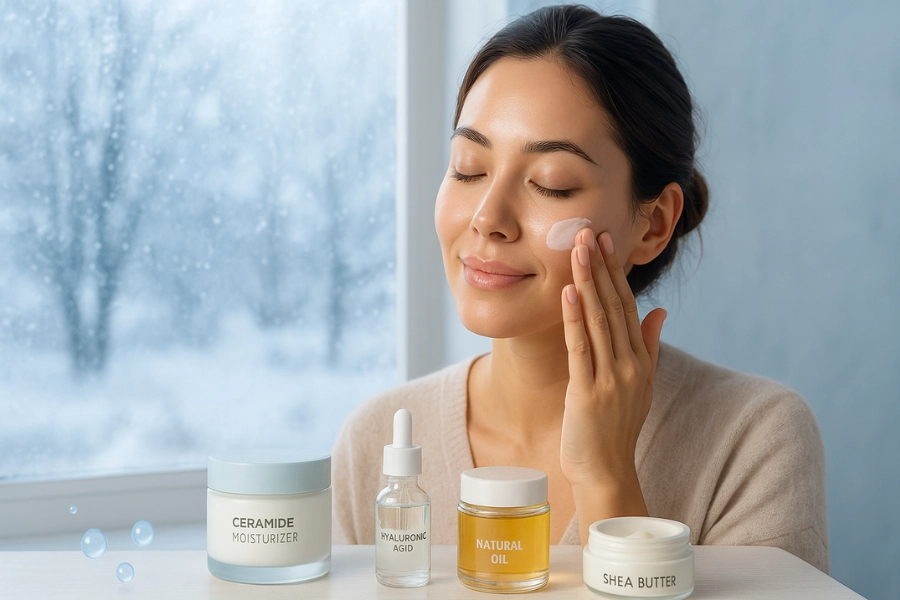
Moisturizing is the cornerstone of winter skincare. Look for rich creams or balms containing ingredients that physically repair and strengthen the skin barrier:
- Ceramides: Essential lipids that restore the skin’s natural protective layer and reduce moisture loss.
- Hyaluronic acid: A powerful humectant that attracts and holds water molecules, providing immediate hydration.
- Shea butter and natural oils: Nourish and soften the skin while creating a protective barrier against environmental aggressors.
For best results, moisturizers should be applied immediately after cleansing or showering on damp skin to seal in hydration. Nighttime treatments like overnight hydrating masks or thicker creams give an intensive moisture boost while skin regenerates.
Hydrating Skin in Cold Weather
Winter skin hydration isn’t just about topical products. Drinking adequate water throughout the day helps maintain your skin’s internal moisture balance, supporting overall skin health.
Using a humidifier indoors can dramatically improve dry skin conditions by increasing air moisture levels. Recommended humidifier models, such as ultrasonic or evaporative types, effectively maintain indoor humidity at 40–60%, which is ideal for skin comfort. Regular cleaning of humidifiers is important to avoid mold growth, which can irritate skin.
Avoiding Hot Showers in Winter
Though tempting in cold months, hot showers do more harm than good to dry skin. Hot water strips away the natural oils that protect your skin, exacerbating dryness and irritation.
Aim for lukewarm showers lasting no more than 5–10 minutes. Pat your skin dry gently with a towel and apply moisturizer immediately afterward to lock in moisture and soothe skin.
Protecting Skin from Cold Weather
Beyond skincare products, physical protection is vital for preventing winter dryness. Cover exposed skin with scarves, gloves, and hats to shield it from cold winds and freezing temperatures.
Don’t skip sunscreen—UV rays reflect off snow and ice and can penetrate clouds, causing damage and dehydration. Use a daily moisturizer with SPF or layer a dedicated sunscreen over your moisturizer.
Hands are particularly vulnerable in cold weather and often suffer from dryness. Maintain hand hydration by applying rich hand creams frequently throughout the day. Wear gloves during outdoor activities and after washing to minimize moisture loss.
Exfoliating Dry Skin Safely
Exfoliation helps remove flaky, dead skin cells that accumulate in winter, allowing moisturizers to absorb better and improving skin texture.
Use gentle exfoliation methods suited for sensitive winter skin:
- Physical exfoliants: Soft scrubs or microfiber cloths used sparingly (once weekly).
- Chemical exfoliants: Mild alpha hydroxy acids like lactic acid or mandelic acid at low concentrations weekly or biweekly.
Avoid over-exfoliating, which can damage the skin barrier and worsen dryness and irritation. Always follow exfoliation with intense moisturizing.
Additional Skin Hydration Tips
Incorporate professional-grade hydrating products such as Nielies’ jelly masks and facial care essentials for an extra boost of moisture and skin rejuvenation. These products are formulated to enhance skin brightness and restore hydration without overwhelming sensitive winter skin.
Layer your skincare products starting with the lightest hydrating serum, followed by a richer moisturizer or mask, to optimize absorption and maintain skin comfort throughout the day.
Dermatologist Recommendations
Leading dermatologists emphasize maintaining the skin barrier’s health as the key to preventing winter dryness. Their scientifically-backed advice includes:
- Use moisturizers rich in ceramides, hyaluronic acid, and fatty acids daily.
- Limit cleansing to twice a day with gentle, fragrance-free products.
- Limit time with hot water and avoid harsh soaps.
- Use sunscreen year-round.
- Consult a dermatologist if you experience severe dryness, cracking, or eczema flares.
Choosing skincare formulations designed for dry and sensitive skin will improve comfort and reduce seasonal skin conditions. Persistent issues should be evaluated professionally to tailor treatment effectively.